About Newman
This was written by me, about me, shaped over years of lived experience, self development, and internal awareness. It reflects a commitment to presence over performance, in that order. Performance is something we can learn to do well. Presence is how we offer it. We are at our best when presence leads, and performance follows. — Newman Millhollon
FOUNDATIONAL
12/30/20253 min read
If You Want to Know About Me, I Hope This Answers Your Questions
(Or Don’t Read It)
About me
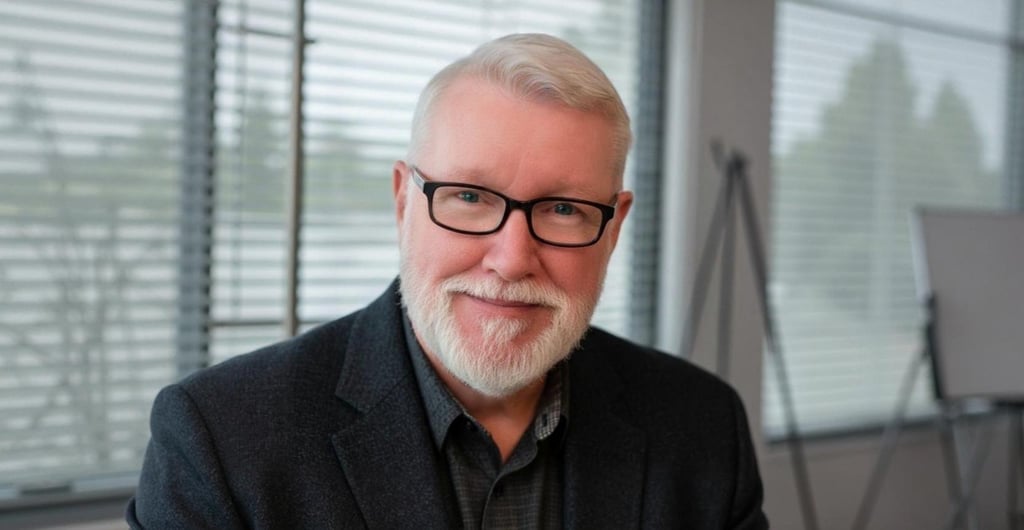
I am an ordained minister, grief coach, mindfulness guide, and writer whose work centers on helping people reconnect with God without abandoning themselves. Through Pride Faith Voices, I create space for LGBTQ Christians and faith wounded seekers to explore scripture, spirituality, and belonging without fear, shame, or forced conformity.
At the heart of my work is a deep fascination with human behavior, not as theory, but as lived experience. How people speak to one another, what they defend, what they avoid, and what they are willing to stay present with all reveals something essential about connection. These moments often provoke an inward dialogue that creates clarity through conflict rather than shutting it down. Revealing what individuals and groups choose to center their focus on shows whether connection is being tended or quietly eroded, within themselves and among one another.
I treat time and attention as sacred resources, not because people lack value, but because focus matters. People are always valuable. What we orient ourselves around, however, can either foster connection or validate distance. When attention is given to systems, identities, or arguments that bypass relationship, disconnection can begin to feel normal, even justified. I believe connection is real, necessary, and worthy of care. Treating it as something casual, performative, or secondary diminishes our shared humanity.
I bring over forty years of experience as a hair stylist and over thirty years in nonprofit administration, often described simply as back office work. These decades shaped a grounded understanding of people, systems, conflict, sustainability, and what actually keeps communities functioning. Listening, adaptability, and quiet problem solving were learned in real time, with real consequences, not in classrooms.
My formation also comes from being a PK, MK, and yes, a Third Culture Kid. My life was shaped by movement between worlds, cultures, and expectations, learning early how to read rooms, navigate difference, and live between identities without losing a sense of self. My education did not come from institutions, but from a vast landscape of lived experience.
I was raised by a woman who was an eighth-grade teacher, a missionary, and a mother, and by a man who survived being forced out of his home at nine years old during the Depression. Together, they built from the ground up two elementary schools, kindergarten through eighth grade, one in Ontario, California, before I was born and one in Ontario Village, Belize, in 1961. That foundation of service and practical courage shaped my understanding of what faith looks like when it becomes action.
I was also deeply shaped by my dad, who became a minister and missionary and who built meaningful structures for his work and for others, not with charisma or self-promotion, but with quiet, non-assuming leadership. He could not hammer a nail straight into a piece of wood, yet somehow managed to build systems, communities, and ministries that held people well. He never took credit. That example of leadership, steady, relational, and unseen, remains one of the most formative influences in my life.
My approach to faith is rooted in lived experience rather than rigid doctrine. I understand scripture as a living story of God’s ongoing relationship with humanity, revealed most clearly through the life and love of Christ. This perspective invites discernment over performance, compassion over control, and presence over certainty. Faith, as I practice it, is not about fitting into verses, but about staying engaged with truth in ways that preserve dignity and relationship.
I did not pursue ordination as a title or spiritual identity. It was suggested to me by a client as a practical step, recognizing that grief support, spiritual care, officiating life moments, pastoral presence, and advocacy sometimes require legal access, accountability, and proper recordkeeping. Ordination provides a framework for doing this work responsibly and within legal requirements, without cutting corners or compromising integrity.
I am not denominational, and I hold longstanding concerns about rigid religious structures that condition ministers to conform, perform, or serve institutions rather than people. I respect legal governance that exists to protect individuals and ensure accountability. I do not accommodate frameworks that undermine human dignity, freedom of expression, personhood, or the pursuit of a full and honest life. Those systems create distance where connection is needed most.
Ministry, as I practice it, is not about managing belief or defending structure. It is about how people are treated in real time. It is about staying present when clarity is uncomfortable, choosing connection over control, and honoring the humanity of others without pretending that depth can be rushed or bypassed.
Titles explain very little.
Structure explains even less.
How we stay connected with ourselves and to one another explains everything.